Legal Management Techniques Department Organizes Scientific Course on the Legal Framework for Combating Poverty
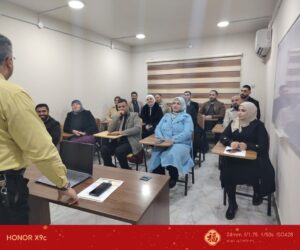
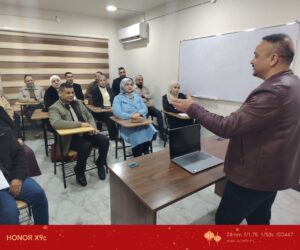
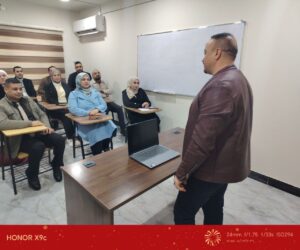
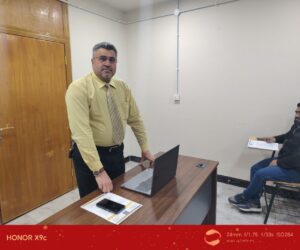
The Department of Legal Management Techniques held a specialized scientific course titled “The Legal Framework for Combating Poverty in National and International Legislation.” The event featured a distinguished group of professors and specialists, including Dr. Alaa Saeed Qasim, Mr. Ahmed Faris Ibrahim Wasfi, and Dr. Mohammed Riyadh Faisal.
Legal and Humanitarian Dimensions
The course provided a comprehensive review of the legal dimensions of poverty, moving beyond traditional economic concepts to position the issue within the context of human rights, social justice, and international obligations. The lecturers focused on analyzing legal drafts that guarantee social protection and a minimum standard of decent living for vulnerable groups. They further highlighted the regulatory and judicial mechanisms necessary to transform these laws from theoretical promises into a tangible reality that safeguards human dignity.
The course provided a comprehensive review of the legal dimensions of poverty, moving beyond traditional economic concepts to position the issue within the context of human rights, social justice, and international obligations. The lecturers focused on analyzing legal drafts that guarantee social protection and a minimum standard of decent living for vulnerable groups. They further highlighted the regulatory and judicial mechanisms necessary to transform these laws from theoretical promises into a tangible reality that safeguards human dignity.
Course Objectives
The course aimed to achieve several strategic goals, most notably:
The course aimed to achieve several strategic goals, most notably:
- Developing Analytical Skills: Enhancing the understanding of the interaction between legislation and reality to contribute to the development of effective legal frameworks.
- Assessing Legislative Harmony: Measuring the alignment of national laws with international conventions, such as the International Covenant on Economic, Social, and Cultural Rights.
- Legal Empowerment: Training participants to draft texts that support the “legal empowerment of the poor” and simplifying administrative procedures to ensure their access to fundamental rights.
Discussion Themes
The sessions featured in-depth discussions focused on:
The sessions featured in-depth discussions focused on:
- Analyzing the Sustainable Development Goals (SDGs) and translating them into legal obligations that mandate states to provide an adequate standard of living.
- Conducting comparative studies of local laws (Social Security, Labor, and Tax Legislation) and the role of the Constitution as a primary guarantee against economic discrimination.
- Exploring ways to facilitate access to justice (Legal Aid) and the role of administrative and constitutional courts in monitoring public policies aimed at poverty reduction.
The course concluded by emphasizing the urgent need to bridge the gap between legal texts and practical application to face contemporary economic challenges
and ensure a legal safety net for the most marginalized populations.